Losing teeth can affect far more than your appearance. While many people postpone treatment because they can still function normally, missing teeth may lead to bone loss, facial changes, difficulty eating, and shifting teeth over time.
However, oral health experts emphasize that a missing tooth can trigger a chain reaction throughout the mouth. The jawbone, surrounding teeth, facial structure, and even nutritional habits can gradually change over time. According to the Ontario Dental Association, tooth loss may contribute to shifting teeth, chewing difficulties, and changes in oral health if left untreated. Understanding these long-term effects can help individuals take proactive steps to protect their health and quality of life.
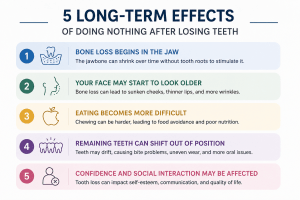
1. Bone Loss Begins in the Jaw
One of the most significant consequences of tooth loss is jawbone deterioration.
Natural tooth roots stimulate the jawbone whenever you chew. When a tooth is missing, that stimulation disappears, and the body begins to reabsorb the bone in that area. This process, known as bone resorption, can gradually reduce the volume and strength of the jawbone.
According to the Canadian Dental Association (CDA), losing teeth can lead to changes in the supporting structures of the mouth over time, potentially affecting future treatment options.
The longer a missing tooth goes untreated, the more bone loss may occur.
2. Your Face May Start to Look Older
Many people are surprised to learn that teeth help support the shape of the face.
When bone loss occurs, the lower portion of the face may begin to lose volume. This can result in:
- Sunken cheeks
- Thinner lips
- More pronounced wrinkles around the mouth
- A collapsed facial profile
These changes often develop gradually, making them difficult to notice at first. Over several years, however, they can contribute to an older appearance.
3. Eating Becomes More Difficult
Even a single missing tooth can affect the way you chew food.
Many people begin avoiding certain foods without realizing it. Common examples include:
- Apples
- Steak
- Nuts
- Raw vegetables
- Crusty bread
As chewing becomes more challenging, some individuals may shift toward softer foods that are often less nutritious.
The National Institute on Aging notes that maintaining good oral health is important for proper nutrition and overall well-being, particularly among older adults.
4. Remaining Teeth Can Shift Out of Position
Teeth are designed to work together. When one tooth is missing, nearby teeth may begin drifting into the empty space.
Over time, this movement can lead to:
- Bite changes
- Uneven tooth wear
- Difficulty cleaning between teeth
- Increased risk of gum disease
- Additional dental complications
What begins as a single missing tooth can eventually affect the alignment and function of the entire mouth.
5. Confidence and Social Interaction May Be Affected
The emotional impact of tooth loss is often overlooked.
Many people become self-conscious about:
- Smiling in photographs
- Speaking in public
- Meeting new people
- Attending social gatherings
- Eating in front of others
For some seniors, these concerns can gradually lead to reduced social engagement and lower self-confidence.
Restoring missing teeth is not only about improving oral function—it can also help people feel more comfortable and confident in everyday life.
Final Thoughts
Doing nothing after losing teeth may seem harmless in the short term, but the long-term effects can be significant. Bone loss, facial changes, difficulty eating, shifting teeth, and reduced confidence are all common challenges associated with untreated tooth loss.
The good news is that modern dental solutions can help address these issues and improve both oral health and quality of life.
If you are exploring options for replacing missing teeth, dentures, or implant-supported solutions, visit GIANOVA Dental Care Solutions to learn more about available treatment pathways and find support that fits your needs.